Last week, while visiting my family in Paris, I was reminded of something that often goes unnoticed in fintech: localisation is not just translation. It’s a strategy. And when you get it wrong, the effect can be counterintuitive, especially when it comes to fintech localisation in France.
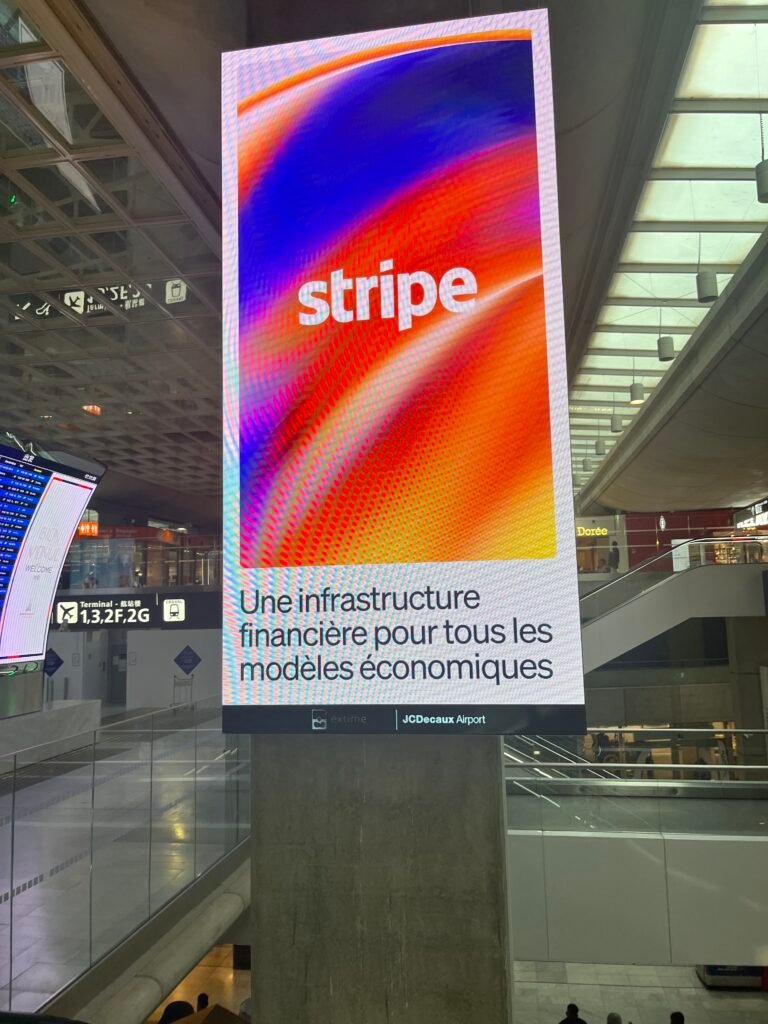
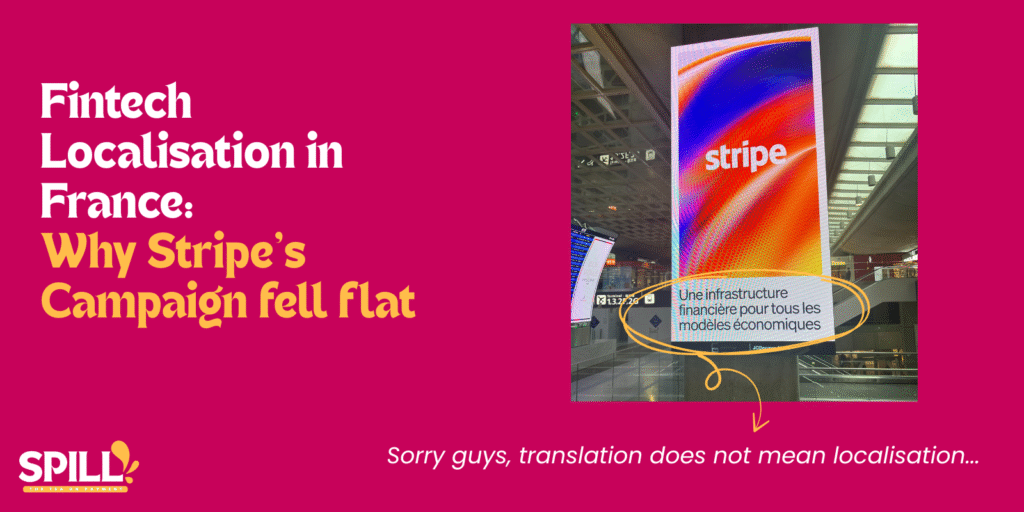
At Roissy airport and in the Paris metro, I stumbled upon a massive Stripe ad campaign. Bright Silicon Valley–style colour fades. Bold typography. A message that tried to be both universal and profound, in French, it read:
« Une infrastructure financière pour tous les modèles économiques. »
” A financial infrastructure for all economic models”
At first glance, it looks professional. But if you’re French, it feels awkward. It doesn’t land. And when you compare it to what local fintechs are doing in their campaigns, the gap is glaring.
From Times Square to Paris: Same Campaign, Different Impact
In New York or SF, the same Stripe campaign looked sharp. The billboard highlights a specific product:
“Advanced billing software to grow any business.”
It’s clear. It’s product-oriented. It speaks to Stripe’s core target: SaaS companies, startups, subscription businesses.
But in Paris, the French translation completely shifts the message. Instead of billing and growth, we get an abstract slogan about “financial infrastructure” and “economic models.”
- Infrastructure financière is too vague for French ears. Finance here is a world of precision. We have technical words for card rails, payment systems, and invoicing. “Infrastructure” means everything and nothing.
- Modèles économiques is the opposite: too academic, too precise. In France, professors discuss business models, not how companies market to entrepreneurs.
The result? A slogan that feels like a bad calque from English: a literal translation that fails to resonate. Instead of building trust, it creates distance.
The Missed Strategic Choice
Here’s the paradox: if Stripe really wanted to keep a “serious” tone in France, they should have simply stuck to their American version.
It was product-centric, precise, and explicit: “Advanced billing software to grow any business.”. That would have been consistent, even if it alienated part of the audience. At least it was clear and credible.
Instead, in Paris, Stripe tried something else for broad awareness, with vague big words that sound impressive in the U.S. but fall flat in France. To French readers, “infrastructure financière pour tous les modèles économiques” sounds like a slogan from a PowerPoint deck. Too explicit for awareness. Too vague for a product. It ends up in no man’s land.
This is where cultural nuance matters. In Anglo-Saxon marketing, saying big, bold words often works: it sounds visionary. In France, and more broadly in Europe, it often feels bullshitey. People don’t connect.
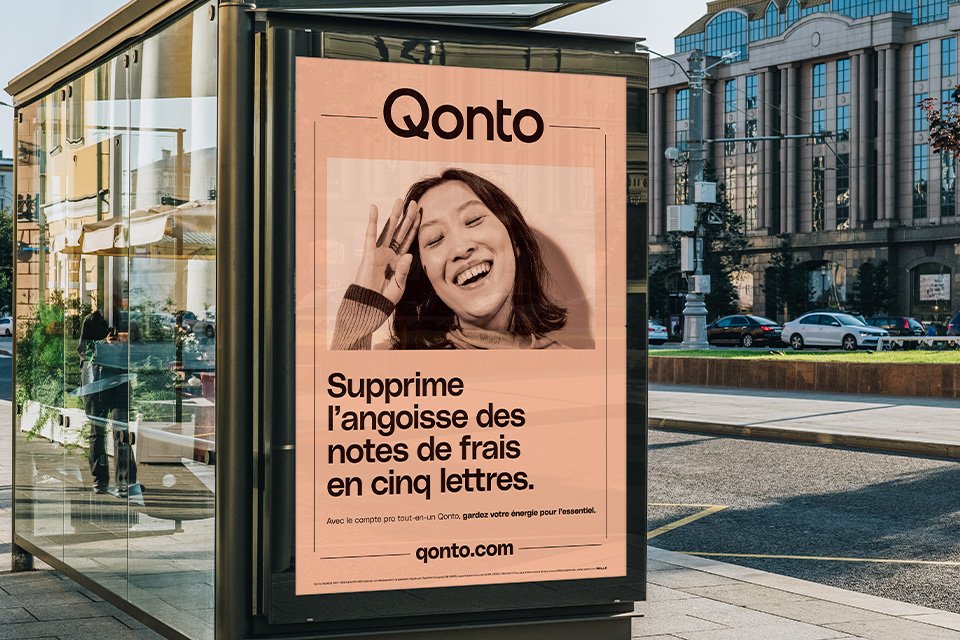
Even when you’re selling a feature, you can use humour and implicit framing. Qonto is a perfect example: they take a very concrete product feature (expense management) and turn it into a witty one-liner about the pain point. It’s still product-driven, but it’s smart, playful, and far more efficient in French culture than trying to wow the audience with vague abstractions.
In short: in France, if you’re too explicit, you look suspicious. If you’re implicit, you look clever.
Why Localisation Matters
French business culture prizes clarity. When it comes to finance, vague promises or abstractions don’t inspire confidence. The language of fintech localisation in France has evolved:
- Be direct about user benefits.
- Use humour or provocation to catch attention.
- Create a sense of connivence: speak like your audience, not at them.
French fintechs like Qonto, Swile, Wero, and Boursobank understand this perfectly. And their campaigns prove that localisation is not about translating words. It’s about translating tone.
The French Fintech Playbook: Implicit, Punchy, Humorous
Let’s examine a few campaigns that demonstrate how French fintechs communicate.
Wero: The Implicit Joke
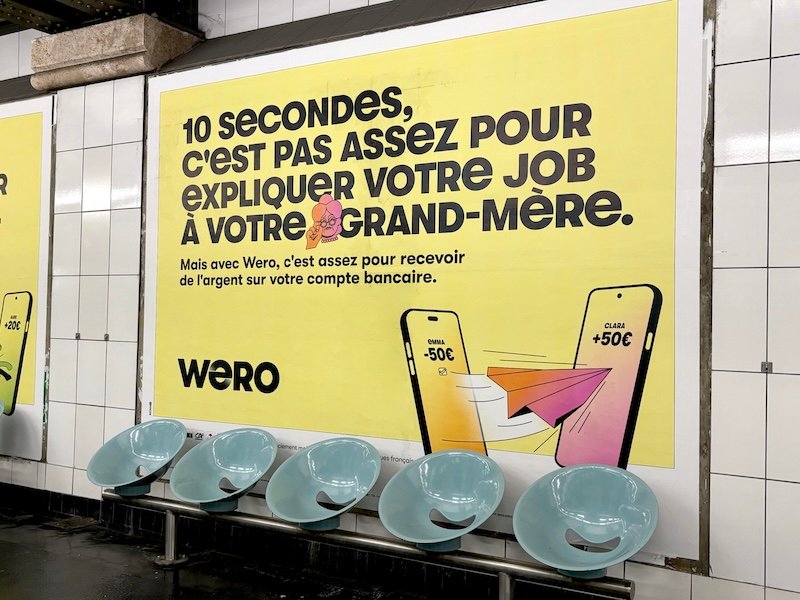
“10 secondes, c’est pas assez pour expliquer votre job à votre grand-mère.
Mais avec Wero, c’est assez pour recevoir de l’argent sur votre compte bancaire.”
“10 seconds is not enough to explain your job to your granny.
But with Wero, it is enough to receive money on your bank account”
Wero plays with an everyday truth for young professionals: explaining your startup job to your grandmother is impossible. But sending money instantly? That’s easy.
It’s funny, relatable, and it hooks the reader through implicit cultural reference. Everyone gets it and it makes Wero look human and approachable.
Qonto: The Pain Point
“Supprime l’angoisse des notes de frais en cinq lettres.”
“Remove your expenses’ anxiety in five letters”
Expense reports are universally hated. Qonto knows this. Their slogan is short, smart, and playful. By framing their service as the solution to a concrete pain point, they win instant sympathy.
Notice: there’s no “financial infrastructure” talk. It’s direct. It’s about you.
Swile: The Sarcasm
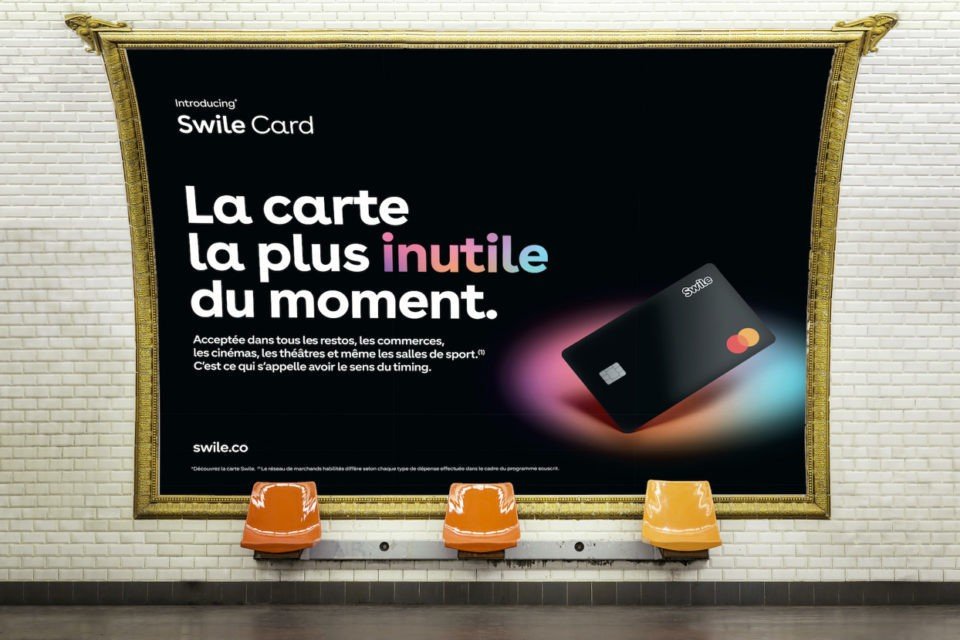
“La carte la plus inutile du moment.”
” The most useless card currently”
At first glance, this looks like an insult to their own product. But the provocation works: the card is “useless” because it replaces all the other benefit cards you used to carry.
It’s sarcastic, playful, and memorable. Swile knows that French audiences appreciate irony, even in serious products like employee benefits.
Boursobank: The Connivence
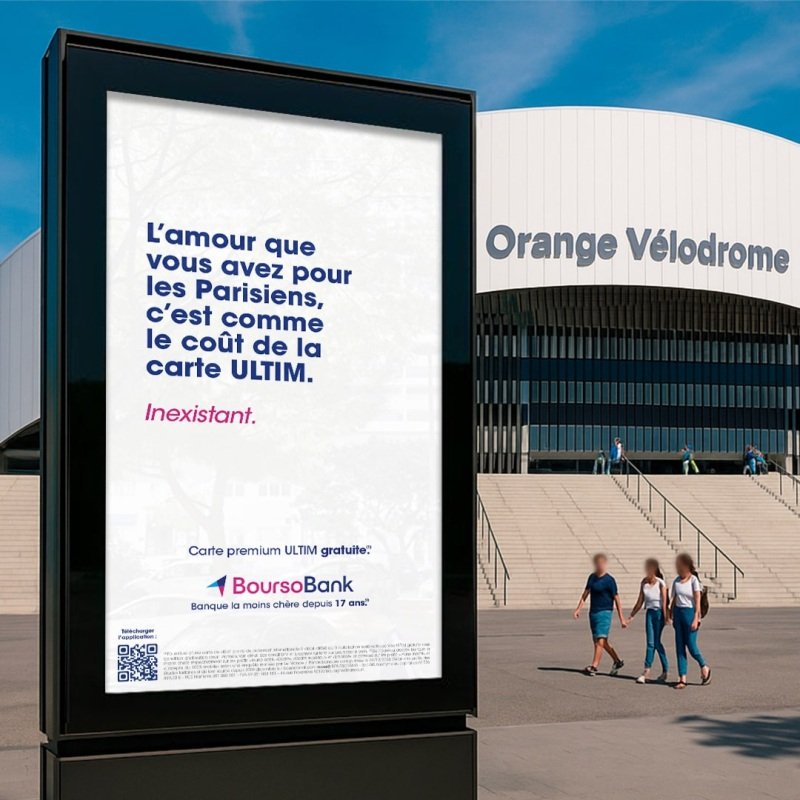
“L’amour que vous avez pour les Parisiens, c’est comme le coût de la carte Ultim: inexistant.”
“The love you have for Parisians is like the cost of our Ultim card : inexistent”
This campaign was displayed in front of Marseille’s Orange Vélodrome stadium, home of Olympique de Marseille, where the rivalry with Paris is cultural.
The joke lands because it speaks directly to local sentiment. It’s cheeky, clever, and creates an immediate bond with the audience.
What These Campaigns Have in Common
- They play on implicit meaning. They don’t explain everything — they let the reader connect the dots.
- They hook with humor or provocation. Sarcasm, irony, exaggeration — it’s part of the French advertising DNA.
- They address real-life pains. Expense reports, sending money, banking fees.
- They build connivence. They speak in the same cultural language as their users.
.And crucially: they do this while being serious businesses. Qonto is a bank for independents. Wero is backed by French banks. Swile manages employee benefits. Yet none of them look stiff or distant. These examples highlight how fintech localisation in France succeeds by being witty, user-centric, and culturally relevant
The Cost of Getting Localisation Wrong
Compared to these campaigns, Stripe’s ad feels like it belongs to another world.
- It’s too serious: infrastructure, economic models, universality.
- It’s too abstract: no mention of a product, no concrete pain point.
- It ignores the local cultural code: in France, fintech ads are expected to wink at you, not lecture you.
Stripe wanted to look global and authoritative. Instead, it comes across as foreign and impersonal.
Massive campaigns like the one in Paris metro stations and Roissy Airport don’t come cheap. But if the message doesn’t land, the effect can be counterintuitive:
- Businesses feel alienated. Instead of thinking “Stripe understands us,” they feel the opposite.
- The brand looks strange. The mismatch between tone and culture makes Stripe look out of place.
- Opportunities are lost. French entrepreneurs who might have been curious are left puzzled.
Localisation errors aren’t just linguistic. They’re strategic mistakes that undermine credibility.
Localisation Is Strategy, Not Translation
What Stripe missed is simple: localisation is not about translating words. It’s about translating culture, tone, and audience expectations.
- In the U.S., “infrastructure for any business” sounds bold.
- In France, it sounds empty.
Fintech localisation in France is simple and those fintechs showed the way: be implicit, be punchy, use humour, and above all, speak like your users.
Walking through Paris, you see the contrast everywhere. On one side, local fintechs running witty, clever campaigns that make you smile. On the other, a global giant like Stripe, spending millions to look impressive, but missing the cultural mark.
The lesson is clear: if you’re a fintech expanding into Europe, localisation isn’t optional. It’s not a detail. It’s the difference between looking cool and looking foreign.